YOGA POSTURES  ASANA YOGA POSES YOGA POSITIONS
Upavistha Konasana
Translation: Seated Angle

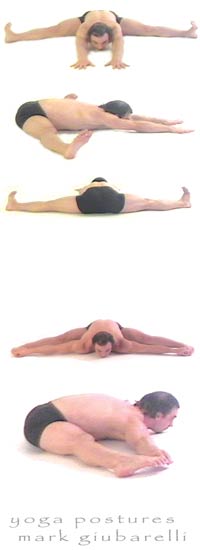
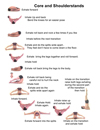
From a seated position open the legs out diagonally. Raise the navel and chest up then lean forward trying to keep a good length in the front of the body. Take the head to the mat. If you are flexible lengthen the spine more and place the chest down. If you are really flexible place the navel on the mat as well. Lengthen the spine as much as possible. Stretch the arms out straight or hold the feet or toes.
Allowing the spine to curve slightly can provide a better stretch on the back and neck but it suppresses the breath. It is good to perform this slight curve in the upper spine if you are not flexible.
There are many variations of hand and arm positions. One of the bound versions of this pose is shown opposite. In this version the big toes are grabbed and feet are pointed forward (The legs can be rotated externally so the toes are pointing vertically upwards). You could also point some of the fingers while holding the big toes. You can grab the whole foot or the arms can be interlocked behind the back. Get creative.
All of the Yoga Postures can be manipulated in many different ways.
Benefits
The hamstring are stretched (the biceps femoris, semitendinosus and the semimembranosus) and the inner leg adductor muscles are stretched. Some of these are , the pectineus, adductor brevis and adductor longus, the gracilis and adductor magnus. The inner tendons in the knee often feel the greatest stretch. These
collectively are called pes anserinus (semitendinosus, gracilis, and sartorious tendon endings). The semimembranosus muscle and tendon ending are also stretched.
At the top of the legs the stretch is most often felt on the conjoined tendon of the semitendinosus and long head of the biceps femorus. The semimembranosus
is also stretched at its head.
Lower back muscles and gluteus muscles are stretched due to the forward bend.
Yoga Teacher Tips
It is natural to want to aid students in this posture by applying a little pressure on their backs to help them down further. It is not wrong to do this but the chances of injuring a student are very high. The risk increase as the force you apply to the back increases. So push gently and get a lot of feedback as you adjust in this pose.
“Avoid harsh adjustments and you will avoid being responsible for injuring people. Remember the first rule of healing: Do no harm.”
Vinyasa Yoga Sequencing and Flowing
Vinyasa Yoga postures to transition from and to:


Paschimottasana Janu Sirsasana Eka Pada Upavistha Parivrttasana Parivrtta Janu Sirsasana Janu Sirsasana II Parivrtta Janu Sirsasana II Parivrtta Janu Sirsasana III Parivrrta Janu Sirsasana IV Balasana Virasana Navasana Salamba Kapotasana Kapotasana Ardha Kapotasana Adho Muka Kapotasana Hanumanasana Halasana Yoganidrasana Supta Konasana Baddha Konasana Parivrtta Upavistha Konasana Parsva Upavistha Konasana Akarna Dhanurasana Urdhva Mukha Upavistha Konasana
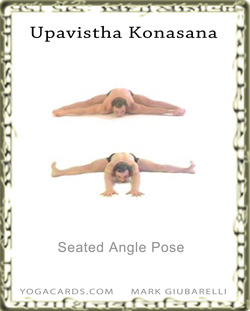
Printable Card